
The U.S. has become home to many forcibly displaced Haitians through humanitarian parole and temporary protection programs that have offered refuge for over 40 years. Since 1992, KRM has proudly welcomed and provided services to Haitians rebuilding their lives in Kentucky.
This year, however, the Trump administration has terminated or announced the intent to terminate Temporary Protected Status (TPS) for over one million people from various nationalities who had been granted safety, as well as the ability to lawfully work and live, in the U.S. This includes the termination of TPS for over 350,000 Haitians that is set to go into effect on February 3rd, 2026.
As we approach Haitian Remembrance Day on the 16th anniversary of the devastating January 12th, 2010, earthquake in Haiti, we encourage you to celebrate the resilience and strength of our neighbors by learning more about the vibrant local community, Haitian displacement, advocacy resources and ways to provide support.
“By supporting one another and creating safe spaces for connection and reunion, our community uses its heritage and roots to create wings and grow – despite the challenges.”
– Erica Joseph
Haitian Displacement, Community & Culture
A Brief Background on Haitian Displacement
Haitian communities have long been part of the fabric of our nation. Continuous tragedies, government corruption and violence that have befallen the people of Haiti, have steadily grown this diaspora for decades. In the late 1960’s, many began fleeing rising human rights abuses and violent repression inflicted by Haitian President, Francois Duvalier. Stability and safety further deteriorated under the leadership of his son throughout the 1970s – 80s. As government corruption grew, it gave way to heightened poverty and rising gang violence – forcing more to flee home. The U.S. Immigration Act of 1990 allowed Haitians a broader opportunity for temporary protection and the possibility of asylum in the United States. Over the next two decades, more arrive to the U.S. as devastating natural disasters contribute to worsening conditions. In 1998, Hurricane Georges kills hundreds and destroys over 80% of the country’s crops. Subsequent hurricanes in 2004 and 2008 inflict more hardship. Extreme flooding, thousands killed, more agricultural destruction and tens of thousands of homes lost cause over $17 billion in damage – a staggering blow that further cripples the national infrastructure. While still recovering, Haiti endured the most catastrophic hit in 2010, when a massive 7.0 magnitude earthquake caused widespread devastation. An estimated 300,000 lives were lost and hundreds of thousands of homes were destroyed, leaving over one million people homeless. Multiple factors have heavily challenged efforts towards reconstruction and stability. Most recently, the 2021 assassination of President Jovenel Moïse has led way to significantly elevated instability, escalated gang violence and human trafficking – forcing record numbers of people to flee in search of safety in recent years. Read more about Haiti in the 21st century HERE.
The Haitian Community in Kentucky
For Haitians rebuilding their lives in Louisville, honoring tradition and encouraging hope are essential for a community striving to heal and overcome great loss. KRM Cuban/Haitian Caseworker and co-founder of The Route nonprofit organization, Erica Joseph, shares, “By supporting one another and creating safe spaces for connection and reunion, our community uses its heritage and roots to create wings and grow – despite the challenges.”
This support and connection are evident through the community events and outreach that center around building a sense of belonging, providing resource accessibility, uplifting one another and celebrating culture. Erica explains, “At many of these events, we share meals together as a way to recreate the sense of community we’ve lost back home.” She adds that these community events will also often celebrate their cultural roots through performances like traditional songs and folkloric dances (as pictured below).

To ensure Haitian families have access to vital needs, community members collect supplies, organize events and join together in support of one another. When speaking about a back-to-school event organized for students and families this past summer, Erica explains, “In Haiti, it’s a tradition to close the summer with a joyful community gathering and supply distribution, as a way to recharge and start the school year with hope.” Making sure families have enough to eat by helping reduce food insecurity is another primary focus across the Haitian community. Events will often have a meal available for attendees; community members will spread information for accessing community resources or host events that provide support to families – like November’s Haitian community dinner and turkey giveaway.
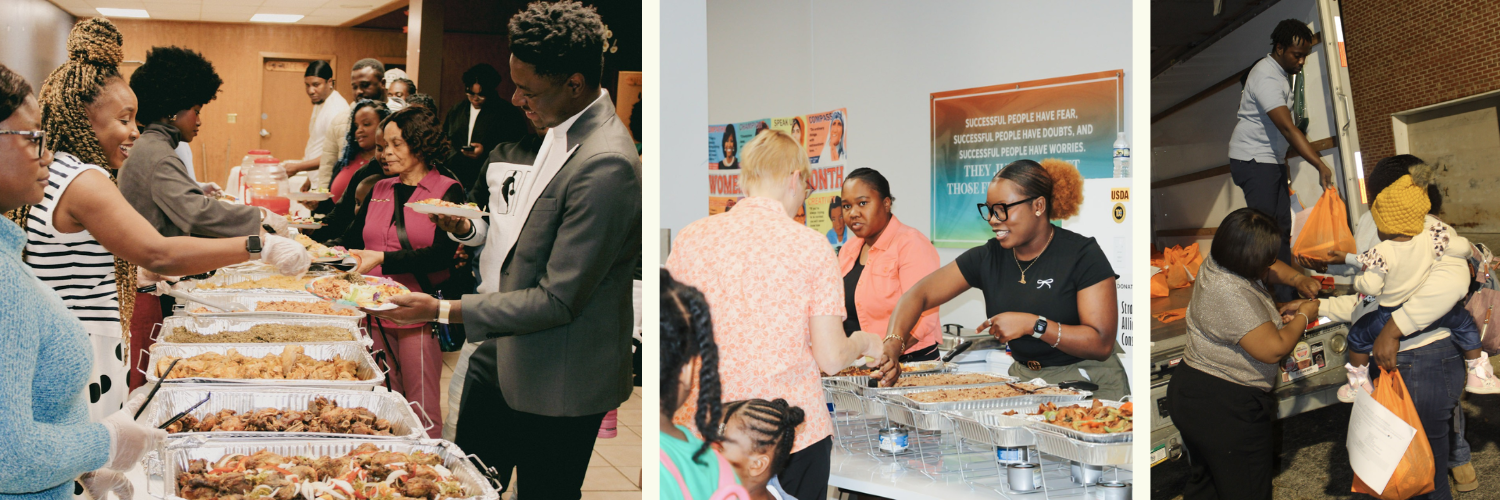
For a community who has endured enormous loss and tragedy, there is not despair – there is resilience. Looking towards growth and the possibilities of the future, Haitians demonstrate the remarkable strength of the human spirit. Once a successful entrepreneur, a local Haitian woman owned multiple businesses with her family in Haiti, including the well-known hotel in Gonaives, Auberge Pont-Gaudin. Due to escalating threats against her family, she was forced to abandon everything she had built and flee in 2023 with nothing but her passport and two children. Through her perseverance and fortitude, she has been diligently working towards rebuilding life for her family. This past March, she received an award for women in business who demonstrate skill and resilience (below center).

Community Awareness, Support & Advocacy
Across the nation, as immigrant and refugee communities face rising challenges, fear and discrimination, it is ever more important that we spread visibility and awareness, stand in solidarity and stay informed. Explore the “Policy and News Resources” on the KRM External Resources page to find immigration data sites, explainer articles and trusted news resources. This includes advocacy guides, like 5Calls.org, that provide instruction on how to contact your elected officials to voice your opposition to harmful immigration policies.
Check out the infographic below to learn more about Haitian immigration to the U.S., resettlement in Kentucky and more ways to support your neighbors:

You must be logged in to post a comment.